History isn’t just a subject we learn in school. It’s the story of humanity, a tapestry woven with countless threads of human experience. While textbook history often focuses on the grand narratives of empires and wars, there’s a wealth of fascinating stories that fall through the cracks, forgotten and overlooked. These are the stories of ordinary people, extraordinary events, and everyday objects that have shaped our world in profound ways.
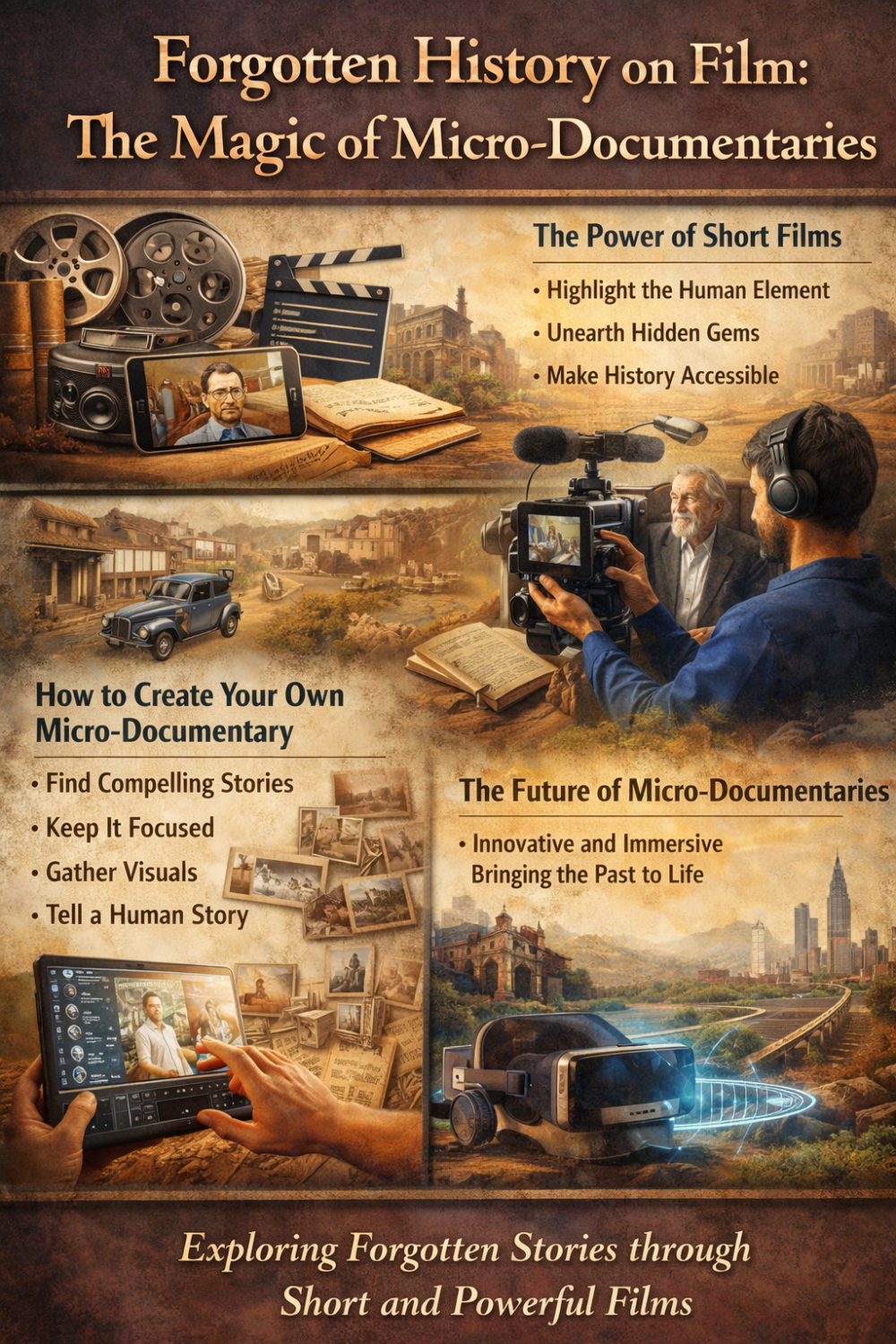
The Power of Short Films
Documentary filmmaking, with its powerful storytelling and visual language, has always been a key medium for exploring history. But the traditional feature-length documentary can sometimes feel daunting, both for the filmmaker and the audience. This is where micro-documentaries come in.
Micro-documentaries, often just a few minutes long, offer a condensed and impactful way to tell stories. They focus on a single, compelling narrative, using powerful visuals, interviews, and archival footage to create a sense of immediacy and connection. This format is particularly well-suited for exploring forgotten history, as it allows filmmakers to:
- Highlight the Human Element: By focusing on individual stories and personal perspectives, micro-documentaries make history feel relatable and human.
- Unearth Hidden Gems: These short films can bring to light fascinating stories that might otherwise be lost to time, such as the history of a small town, the life of an unsung hero, or the origins of an everyday object.
- Make History Accessible: Micro-documentaries are easy to consume, making them ideal for online platforms and social media. They can spark curiosity and encourage viewers to delve deeper into historical topics.
The Rise of Micro-Documentaries
In recent years, we’ve seen a surge in micro-documentaries dedicated to exploring forgotten history. Filmmakers and content creators are using platforms like YouTube, Vimeo, and even Instagram to share these powerful stories with a global audience.
One notable example is the channel “The Great War,” which uses short, informative videos to explore the complexities of World War I. Another popular channel, “Timeline,” creates visually stunning micro-documentaries that transport viewers back to key moments in history. These are just a few examples of the many creators who are using micro-documentaries to breathe new life into forgotten history.
How to Create Your Own Micro-Documentary
Creating your own micro-documentary is more accessible than you might think. With a smartphone and some basic editing software, you can share your own historical stories with the world. Here are a few tips to get you started:
- Find a Compelling Story: Look for stories in your own community, family history, or personal research. What’s a story that hasn’t been told?
- Keep It Focused: Choose a single narrative thread to explore and keep your documentary concise and to the point.
- Gather Visuals: Use old photographs, news clippings, and other archival materials to bring your story to life. If possible, conduct interviews with people who have first-hand knowledge of the events.
- Tell a Human Story: Focus on the people involved in the story and their emotions and experiences.
- Use Editing Software: There are many free and low-cost editing software options available, such as iMovie, Windows Movie Maker, and Shortcut.
The Future of Micro-Documentaries
Micro-documentaries are not just a passing trend. They represent a significant shift in how we consume and engage with history. As technology continues to evolve and platforms like VR and AR become more accessible, we can expect to see even more innovative and immersive ways to experience forgotten history.
By uncovering the forgotten stories of our past, micro-documentaries offer us a deeper understanding of ourselves and our place in the world. They remind us that history is not a static subject, but a living, breathing entity that continues to shape our present and future.