
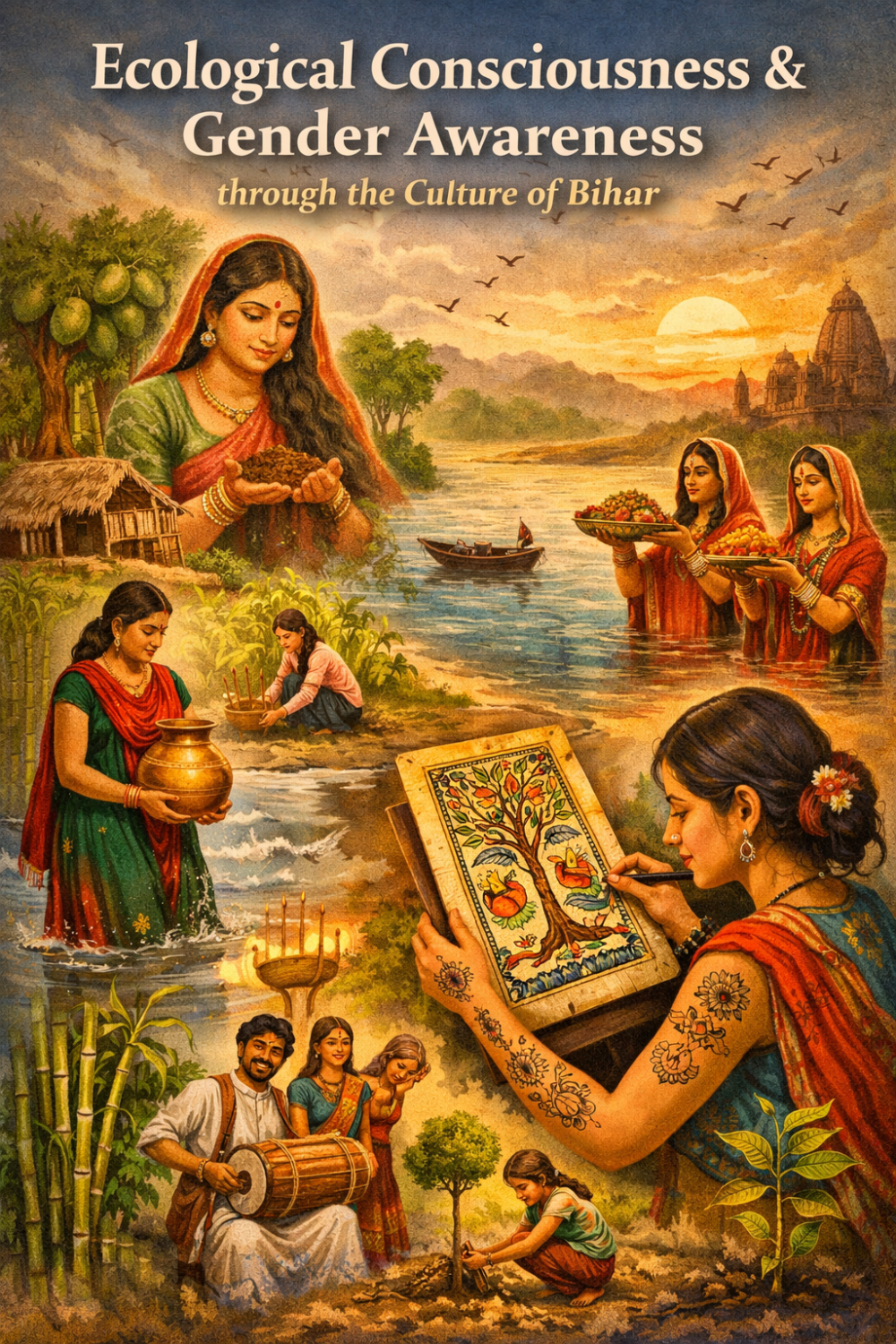
Exploring Socio-Environmental Intersections in Regional Narratives
Introduction
Bihar’s cultural identity is deeply intertwined with its geography. Its literature reflects not merely human stories but the rhythms of the land itself. Rivers, soil, forests, and rural landscapes shape everyday life and cultural imagination.
In recent decades, ecofeminism has emerged as an important lens for understanding Bihar’s cultural narratives. The exploitation of nature often mirrors the marginalization of women. In this context, Mati (soil) and Nari (woman) function as powerful metaphors — both life-giving, yet frequently neglected and exploited.
This article explores how ecological awareness and gender consciousness coexist and interact in Bihari literature, folk traditions, and cultural practices.
Ecological Consciousness in Bihari Narratives
The regional (“Anchalik”) literary movement, pioneered by Phanishwar Nath ‘Renu’, brought the environment to the forefront of storytelling. His landmark novel Maila Anchal portrays the landscape of Purnia not merely as a setting, but as a living presence.
Nature as Nurturer and Destroyer
The Koshi River frequently symbolizes nature’s dual character — both sustaining life and causing devastation through floods.
Folk Traditions and Ecological Ethics
Festivals such as Chhath Puja emphasize reverence for the Sun, rivers, and water bodies, reflecting a non-anthropocentric worldview rooted in ecological respect.
A Bhojpuri folk line captures the ecological ethos:
“Kaanch hi baans ke bahangiya, bahangi lachkat jaaye…”
The bamboo poles sway gently — a reminder of natural materials connecting humans to the sacred.
This highlights the traditional use of biodegradable materials like bamboo, symbolizing harmony with nature.
Gender Awareness: The Subaltern Voice
In Bihari literature, gender is often portrayed through resilience, endurance, and domestic ecological stewardship.
Writers such as Usha Kiran Khan and Anamika depict women as conservators of culture, seeds, and traditions.
Sita as an Ecological Symbol
Sita is revered as Bhumija — daughter of the earth — linking feminine identity directly to ecological roots.
The Domestic Ecosystem
The Aangan (courtyard) functions as a micro-ecosystem where women manage:
- medicinal herbs
- food resources
- oral traditions
- seed preservation
Land, Water, and Womanhood: An Intersectional Perspective
Contemporary writers like Amitava Kumar highlight how environmental degradation — floods, deforestation, and displacement — disproportionately affects women.
When rivers flood, women must sustain households, manage resources, and rebuild domestic stability. This reality reflects what scholars call the “environmentalism of the poor.”
Regional Literary Expressions of Eco-Gender Consciousness
The connection between ecology and womanhood becomes especially vivid in Bihar’s regional languages — Maithili, Bhojpuri, and Magahi.
A. Maithili Literature: The Daughter-of-Earth Perspective
The Maithili poetic tradition, especially the works of Vidyapati, portrays nature as a confidante to women.
The Abhisarika Nayika (heroine venturing out) traverses forests and storms, symbolizing harmony between feminine strength and the wild landscape.
A recurring motif expresses daily ecological interaction:
“Paniya bharai hum gelun sagar…”
(I went to the waters to fill my pitcher.)
Women’s daily interaction with ponds and rivers reflects their role as primary managers of natural resources. Environmental degradation therefore directly affects their labor and dignity.
B. Bhojpuri Folklore: Songs of Season and Separation
Bhojpuri folk traditions, especially those of Bhikhari Thakur, depict rural ecological life and emotional resilience.
Seasonal Songs (Kajari & Chaiti) celebrate monsoon rains, fertility, and renewal.
Migration narratives express longing and ecological companionship:
Women left behind in villages often converse with birds, trees, and the moon — finding emotional refuge in nature.
The iconic Bhojpuri patriotic song Batohiya by Raghubir Narayan celebrates the beauty of the land while expressing deep ecological reverence.
C. Madhubani Art and the Symbolism of Godna
Madhubani painting represents a pinnacle of gendered ecological expression.
Women traditionally create paintings using natural dyes from turmeric, flowers, and indigo. Motifs such as fish, lotus, and bamboo symbolize fertility and continuity of life.
The Godna (tattoo) tradition further reflects ecological identity. Flora and fauna etched onto women’s skin symbolize the body as a living archive of the natural world.
A Living Ecofeminist Practice: Dharhara Village
The village of Dharhara has gained recognition for a unique tradition: when a girl child is born, families plant ten fruit-bearing trees, often mango or litchi.
This practice:
- celebrates daughters as blessings
- promotes ecological sustainability
- supports future education and financial security
- reframes gender attitudes positively
It demonstrates how ecological health and gender empowerment can reinforce one another.
Conclusion: A Shared Future
The culture of Bihar teaches that environmental protection and women’s empowerment are inseparable.
From the literature of Renu to folk songs and artistic traditions, Bihar’s cultural expressions emphasize a vital truth:
We cannot heal the land without honoring the hands that care for it.