Posts by Rabiro Marketing Agency

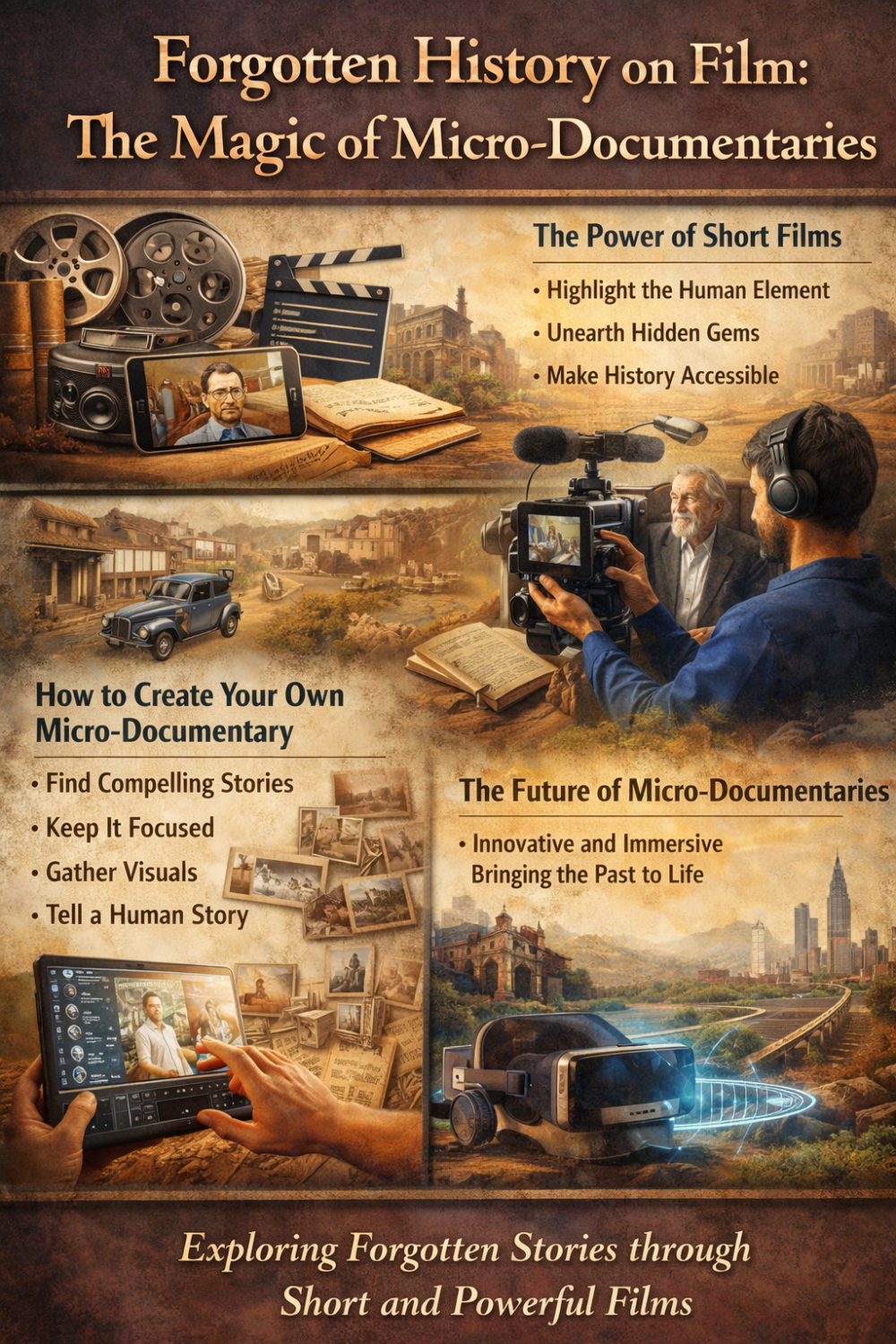
Forgotten History on Film: The Magic of Micro-Documentaries

History isn’t just a subject we learn in school. It’s the story of humanity, a tapestry woven with countless threads of human experience. While textbook history often focuses on the grand narratives of empires and wars, there’s a wealth of fascinating stories that fall through the cracks, forgotten and overlooked. These are the stories of ordinary people, extraordinary events, and everyday objects that have shaped our world in profound ways.

The Power of Short Films

Documentary filmmaking, with its powerful storytelling and visual language, has always been a key medium for exploring history. But the traditional feature-length documentary can sometimes feel daunting, both for the filmmaker and the audience. This is where micro-documentaries come in.

Micro-documentaries, often just a few minutes long, offer a condensed and impactful way to tell stories. They focus on a single, compelling narrative, using powerful visuals, interviews, and archival footage to create a sense of immediacy and connection. This format is particularly well-suited for exploring forgotten history, as it allows filmmakers to:

  • Highlight the Human Element: By focusing on individual stories and personal perspectives, micro-documentaries make history feel relatable and human.
  • Unearth Hidden Gems: These short films can bring to light fascinating stories that might otherwise be lost to time, such as the history of a small town, the life of an unsung hero, or the origins of an everyday object.
  • Make History Accessible: Micro-documentaries are easy to consume, making them ideal for online platforms and social media. They can spark curiosity and encourage viewers to delve deeper into historical topics.

The Rise of Micro-Documentaries

In recent years, we’ve seen a surge in micro-documentaries dedicated to exploring forgotten history. Filmmakers and content creators are using platforms like YouTube, Vimeo, and even Instagram to share these powerful stories with a global audience.

One notable example is the channel “The Great War,” which uses short, informative videos to explore the complexities of World War I. Another popular channel, “Timeline,” creates visually stunning micro-documentaries that transport viewers back to key moments in history. These are just a few examples of the many creators who are using micro-documentaries to breathe new life into forgotten history.

How to Create Your Own Micro-Documentary

Creating your own micro-documentary is more accessible than you might think. With a smartphone and some basic editing software, you can share your own historical stories with the world. Here are a few tips to get you started:

  • Find a Compelling Story: Look for stories in your own community, family history, or personal research. What’s a story that hasn’t been told?
  • Keep It Focused: Choose a single narrative thread to explore and keep your documentary concise and to the point.
  • Gather Visuals: Use old photographs, news clippings, and other archival materials to bring your story to life. If possible, conduct interviews with people who have first-hand knowledge of the events.
  • Tell a Human Story: Focus on the people involved in the story and their emotions and experiences.
  • Use Editing Software: There are many free and low-cost editing software options available, such as iMovie, Windows Movie Maker, and Shortcut.

The Future of Micro-Documentaries

Micro-documentaries are not just a passing trend. They represent a significant shift in how we consume and engage with history. As technology continues to evolve and platforms like VR and AR become more accessible, we can expect to see even more innovative and immersive ways to experience forgotten history.

By uncovering the forgotten stories of our past, micro-documentaries offer us a deeper understanding of ourselves and our place in the world. They remind us that history is not a static subject, but a living, breathing entity that continues to shape our present and future.
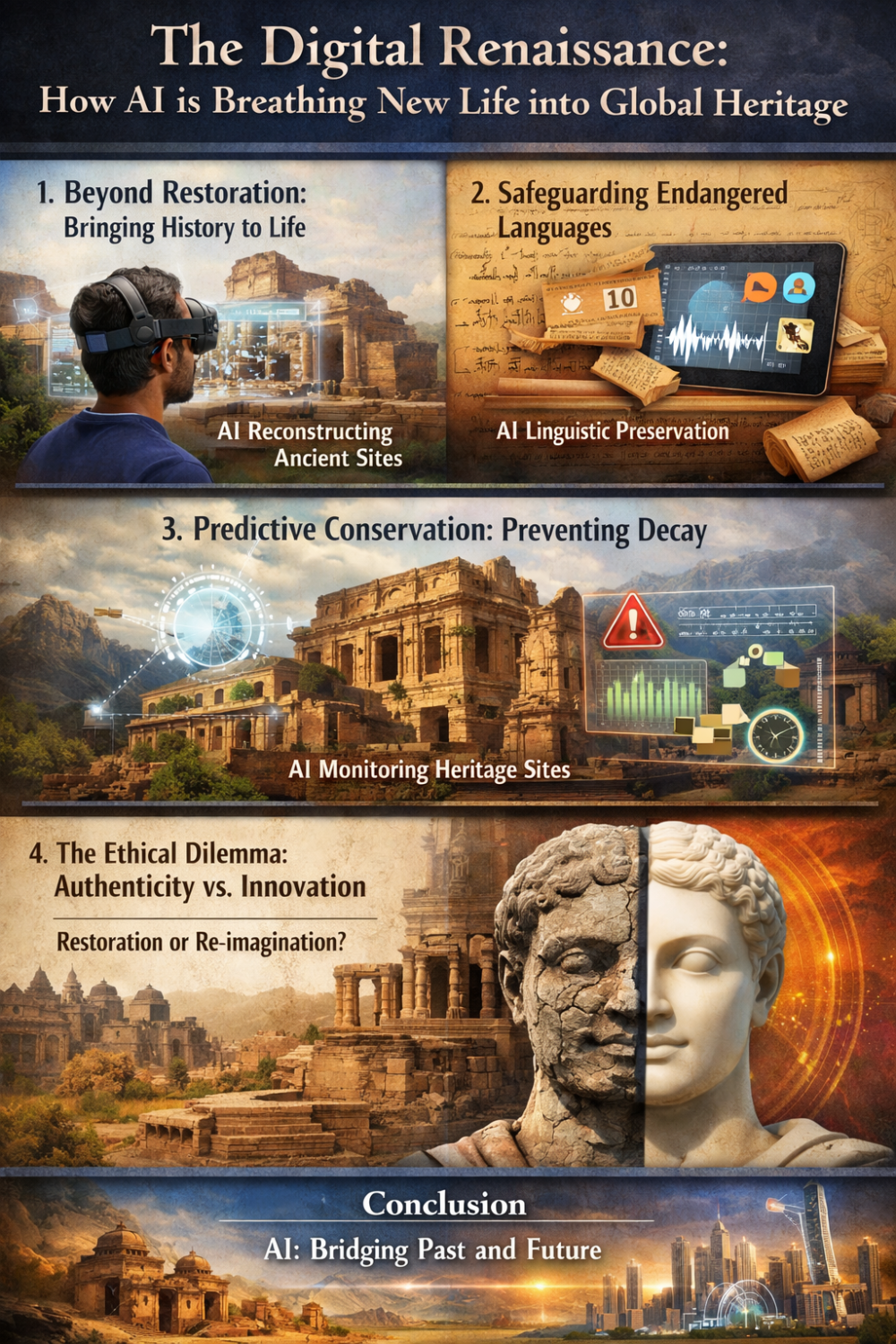
The Digital Renaissance: How AI is Breathing New Life into Global Heritage

In the past, “Heritage” and “Artificial Intelligence” felt like two ends of a spectrum. One was rooted in the dusty corridors of museums and ancient ruins, while the other lived in the sterile, high-speed world of silicon chips and algorithms. However, we are currently witnessing a Digital Renaissance where these two worlds are merging to save our collective past.

1. Beyond Restoration: Bringing History to Life

We’ve moved past simple photo enhancement. Today, AI models are being used to reconstruct lost monuments. Using Generative Adversarial Networks (GANs), researchers can analyze fragments of broken sculptures or faded murals to predict—with startling accuracy—how they originally looked.

Imagine walking through a 3D-reconstructed Nalanda University or the Library of Alexandria through an AR headset, powered by historical data points processed by AI. It’s no longer just “learning” history; it’s “experiencing” it.

2. Safeguarding Endangered Languages

Culture isn’t just stone and mortar; it’s the way we speak. Hundreds of indigenous languages are at risk of extinction. AI is now being used as a linguistic “time capsule.”

  • Natural Language Processing (NLP) tools are being trained on rare dialects to create digital archives.
  • These tools help translate ancient scripts that have remained undeciphered for centuries, potentially rewriting chapters of human history we thought were lost.

3. Predictive Conservation: Preventing Decay

Heritage sites are constantly under threat from climate change and urban decay. AI-driven Predictive Modeling allows conservationists to monitor structural changes in real-time. By analyzing satellite imagery and sensor data, AI can predict which part of a temple or a castle is likely to collapse years before it actually happens, allowing for preventive “surgery” on the structure.

4. The Ethical Dilemma: Authenticity vs. Innovation

If an AI “completes” a broken statue, is it still an authentic piece of history? The line between restoration and re-imagination is thinning. As we integrate AI into heritage, the challenge lies in ensuring that the technology respects the cultural soul of the artifact without “colonizing” it with modern biases.

Conclusion

AI is not a threat to our heritage; it is its new guardian. By bridging the gap between the 12th century and the 21st, we are ensuring that the wisdom of our ancestors isn’t just preserved in books, but is alive, interactive, and relevant for the generations to come.

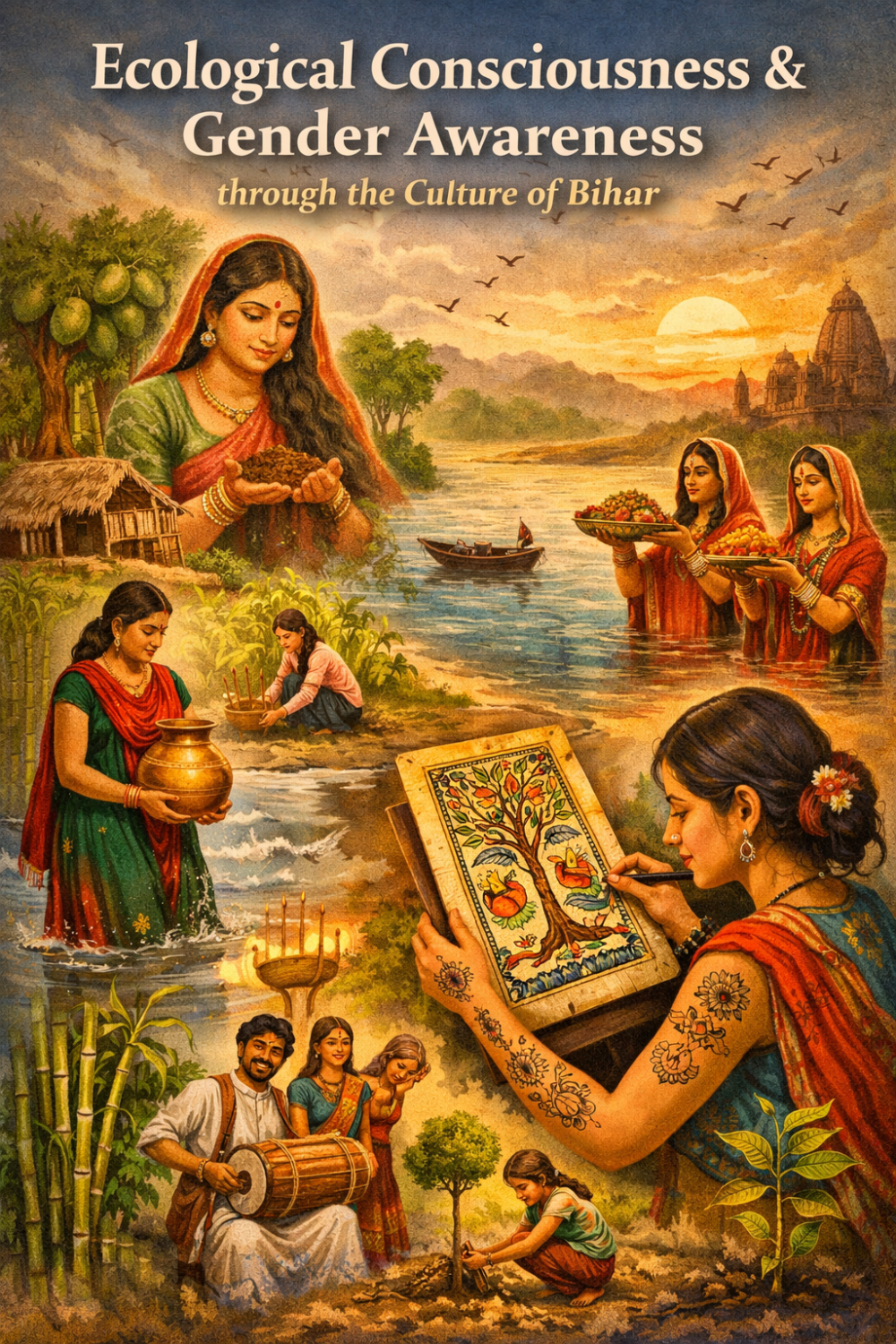
Ecological Consciousness and Gender Awareness through the Culture of Bihar

Exploring Socio-Environmental Intersections in Regional Narratives

Introduction

Bihar’s cultural identity is deeply intertwined with its geography. Its literature reflects not merely human stories but the rhythms of the land itself. Rivers, soil, forests, and rural landscapes shape everyday life and cultural imagination.

In recent decades, ecofeminism has emerged as an important lens for understanding Bihar’s cultural narratives. The exploitation of nature often mirrors the marginalization of women. In this context, Mati (soil) and Nari (woman) function as powerful metaphors — both life-giving, yet frequently neglected and exploited.

This article explores how ecological awareness and gender consciousness coexist and interact in Bihari literature, folk traditions, and cultural practices.

Ecological Consciousness in Bihari Narratives

The regional (“Anchalik”) literary movement, pioneered by Phanishwar Nath ‘Renu’, brought the environment to the forefront of storytelling. His landmark novel Maila Anchal portrays the landscape of Purnia not merely as a setting, but as a living presence.

Nature as Nurturer and Destroyer

The Koshi River frequently symbolizes nature’s dual character — both sustaining life and causing devastation through floods.

Folk Traditions and Ecological Ethics

Festivals such as Chhath Puja emphasize reverence for the Sun, rivers, and water bodies, reflecting a non-anthropocentric worldview rooted in ecological respect.

A Bhojpuri folk line captures the ecological ethos:

“Kaanch hi baans ke bahangiya, bahangi lachkat jaaye…”
The bamboo poles sway gently — a reminder of natural materials connecting humans to the sacred.

This highlights the traditional use of biodegradable materials like bamboo, symbolizing harmony with nature.

Gender Awareness: The Subaltern Voice

In Bihari literature, gender is often portrayed through resilience, endurance, and domestic ecological stewardship.

Writers such as Usha Kiran Khan and Anamika depict women as conservators of culture, seeds, and traditions.

Sita as an Ecological Symbol

Sita is revered as Bhumija — daughter of the earth — linking feminine identity directly to ecological roots.

The Domestic Ecosystem

The Aangan (courtyard) functions as a micro-ecosystem where women manage:

  • medicinal herbs
  • food resources
  • oral traditions
  • seed preservation

Land, Water, and Womanhood: An Intersectional Perspective

Contemporary writers like Amitava Kumar highlight how environmental degradation — floods, deforestation, and displacement — disproportionately affects women.

When rivers flood, women must sustain households, manage resources, and rebuild domestic stability. This reality reflects what scholars call the “environmentalism of the poor.”

Regional Literary Expressions of Eco-Gender Consciousness

The connection between ecology and womanhood becomes especially vivid in Bihar’s regional languages — Maithili, Bhojpuri, and Magahi.

A. Maithili Literature: The Daughter-of-Earth Perspective

The Maithili poetic tradition, especially the works of Vidyapati, portrays nature as a confidante to women.

The Abhisarika Nayika (heroine venturing out) traverses forests and storms, symbolizing harmony between feminine strength and the wild landscape.

A recurring motif expresses daily ecological interaction:

“Paniya bharai hum gelun sagar…”
(I went to the waters to fill my pitcher.)

Women’s daily interaction with ponds and rivers reflects their role as primary managers of natural resources. Environmental degradation therefore directly affects their labor and dignity.

B. Bhojpuri Folklore: Songs of Season and Separation

Bhojpuri folk traditions, especially those of Bhikhari Thakur, depict rural ecological life and emotional resilience.

Seasonal Songs (Kajari & Chaiti) celebrate monsoon rains, fertility, and renewal.

Migration narratives express longing and ecological companionship:

Women left behind in villages often converse with birds, trees, and the moon — finding emotional refuge in nature.

The iconic Bhojpuri patriotic song Batohiya by Raghubir Narayan celebrates the beauty of the land while expressing deep ecological reverence.

C. Madhubani Art and the Symbolism of Godna

Madhubani painting represents a pinnacle of gendered ecological expression.

Women traditionally create paintings using natural dyes from turmeric, flowers, and indigo. Motifs such as fish, lotus, and bamboo symbolize fertility and continuity of life.

The Godna (tattoo) tradition further reflects ecological identity. Flora and fauna etched onto women’s skin symbolize the body as a living archive of the natural world.

A Living Ecofeminist Practice: Dharhara Village

The village of Dharhara has gained recognition for a unique tradition: when a girl child is born, families plant ten fruit-bearing trees, often mango or litchi.

This practice:

  • celebrates daughters as blessings
  • promotes ecological sustainability
  • supports future education and financial security
  • reframes gender attitudes positively

It demonstrates how ecological health and gender empowerment can reinforce one another.

Conclusion: A Shared Future

The culture of Bihar teaches that environmental protection and women’s empowerment are inseparable.

From the literature of Renu to folk songs and artistic traditions, Bihar’s cultural expressions emphasize a vital truth:

We cannot heal the land without honoring the hands that care for it.

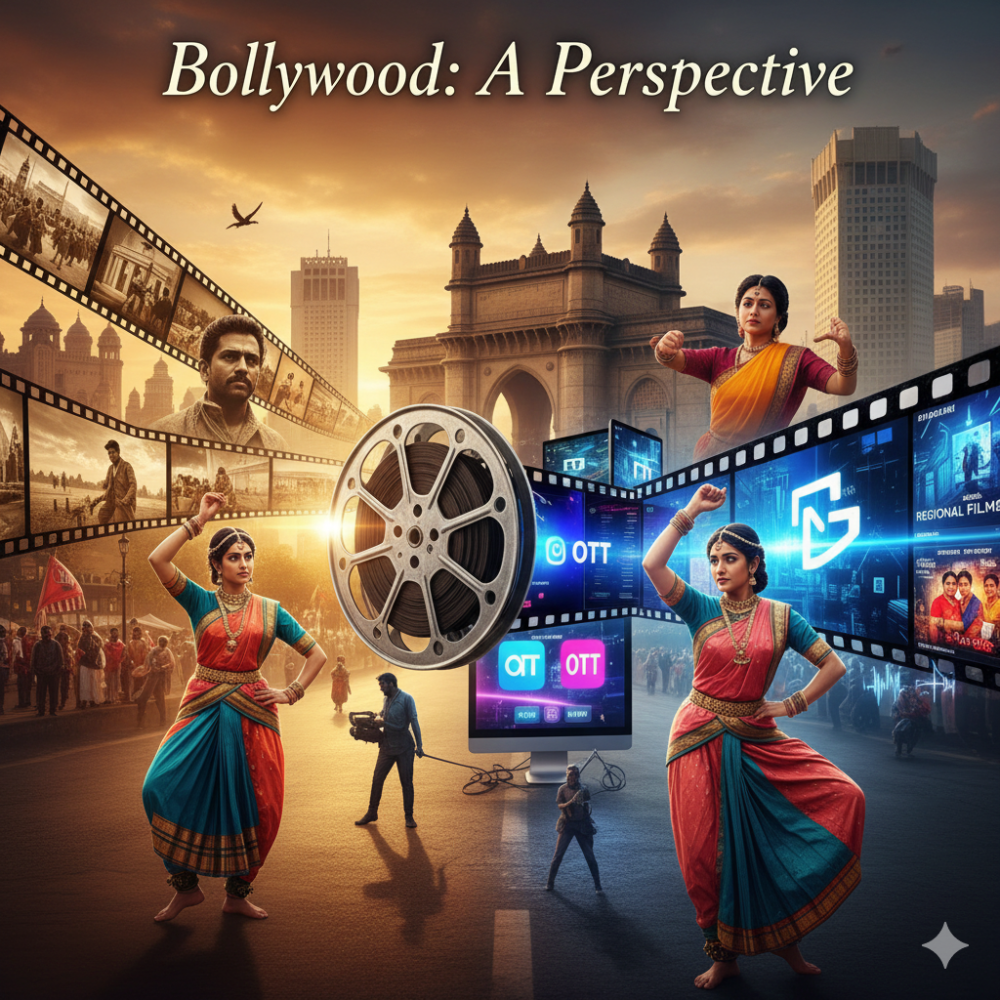
Bollywood: A Perspective

1. Introduction and Global Standing

  • Mass Appeal: Cinema is currently the most accessible and influential medium of entertainment for the Indian public, playing a vital role in shaping pop culture and daily life.
  • Global Representation: Since its inception in 1913, Bollywood has served as the primary global representative of Indian cinema.
  • Economic Dominance: Before the 2019 pandemic, India produced 1,500 to 2,000 films annually, generating over seven thousand crore rupees in revenue. Until the early 2000s, Bollywood alone accounted for nearly half of these films and over 44% of total industry revenue.+1
  • Origins: The industry began in 1913 with Dadasaheb Phalke’s Raja Harishchandra. The name “Bollywood” is a portmanteau of “Bombay” and “Hollywood,” with Bombay becoming the industry epicentre due to the availability of electricity and the widespread use of the Hindi language.+1

2. Bollywood as a Reflection of Society

Historically, Bollywood storylines have mirrored the social and political climate of each decade:

  • Post-Independence: Focus on revolutionary and nationalist movements (e.g., Jhansi ki Rani).
  • War and Conflict: Glorification of armed forces during border conflicts (e.g., Haqeeqat, Border).
  • The Socialist Era: Nehruvian socialist inclinations portrayed capitalism as a source of oppression (e.g., Bhuvan Shome).
  • The 1970s and 80s: Reflected rising inflation and unemployment through the “Angry Young Man” archetype representing the working class (e.g., Zanjeer, Deewar).
  • Economic Reform and the 21st Century: Post-1991 stories shifted toward praising capitalism and portraying the aspirations of the wealthy, often blending Western influences with traditional Indian family values.

3. Evolution of Villains

The identity of the “villain” has shifted alongside social changes:

  • Post-Independence: Britishers.
  • 1960s-1970s: Bandits, thugs, and later, oppressive zamindars (landlords).
  • 1980s-1990s: Smugglers of gold and weapons, reflecting real-world crime in Bombay.
  • 1990s-Present: Terrorists, followed by modern threats such as cybercrime, financial fraud, and educational scams.

4. Current Challenges and Crisis

Despite its resources, experts believe Bollywood is losing its prestige due to several internal and external factors:+1

  • The Cash Trap: A lack of experimentation has led to repetitive storylines. Excessive budgets are often spent on star salaries and marketing rather than quality scripts or directing.+1
  • Nepotism: The practice of established personalities favoring their children has hindered creativity and denied opportunities to talented outsiders, a debate intensified by the death of actor Sushant Singh Rajput.+1
  • Political Polarization: Artists increasingly identify with specific ideologies, leading to content and marketing strategies designed to appease or polarize audiences rather than focus on artistic merit.+1
  • Underworld Connections: Past glorification of crime and real-life links to the underworld—highlighted by the 1993 blasts and various celebrity scandals—have damaged public perception.
  • Cultural Disconnect: Many feel the industry has become an “echo chamber” disconnected from the masses, sometimes disrespecting national or religious sentiments.

5. The Impact of Technology and Regional Cinema

  • Internet Revolution: High-speed internet and smartphones have exposed audiences to international cinema, shifting the focus from “hero worshiping” to appreciating realism and method acting.+1
  • Breaking Barriers: The success of Bahubali and the rise of OTT platforms (Netflix, Amazon Prime) have proven that language is no longer a barrier. Subtitles and dubbing have allowed regional treasures to challenge Bollywood’s dominance.+3

6. Future Outlook

While Bollywood has faced a downfall over the last two decades, it possesses the talent and resources to “bounce back”. To remain relevant, the industry must:+2

  • Prioritize quality content over superstar-led remakes.
  • Experiment with new genres, such as ancient legends, cultural themes, and strong female leads.
  • Look beyond box office collections to embrace creativity as the “soul” of storytelling.

The Alchemy of Breath: How Our Words Sculpt Our Reality

Have you ever wondered why certain words feel like a warm embrace while others cut like a knife? It isn’t just about the dictionary definition; it is about the frequency.

Everything in the universe—from the stars above to the microscopic cells in our bodies—exists in a state of constant vibration. When we speak, we aren’t just communicating information; we are releasing energy waves that physically reshape our physical reality.

1. The Science of Sound: Beyond the Ears

Our bodies are composed of approximately 70% water. This makes us the perfect medium for Cymatics—the study of visible sound vibration.

As famously explored in the studies of Dr. Masaru Emoto, water molecules react structurally to intentions and sounds:

  • Positive Vibrations: Words spoken with clarity and kindness create beautiful, symmetrical geometric patterns in cellular fluid.
  • Negative Impact: Harsh tones or hateful words create chaotic, fractured patterns.

By consciously choosing our Akshar (alphabets) and their resonance, we perform a form of “internal alchemy,” shifting our mood, health, and even our luck.

2. Echoes in Literature: The Power of Phonetics

The transformative power of speech isn’t just a scientific theory; it’s a literary cornerstone. In George Bernard Shaw’s masterpiece, Pygmalion, we see this play out through Eliza Doolittle.

Professor Henry Higgins doesn’t just change Eliza’s social status; he changes her vibration. Shaw implies that the science of speech is the most important of all sciences because:

“The way we pronounce our words—the rhythm, the tone, and the vibration—defines our place in society.”

When Eliza changes her speech, she doesn’t just change her accent; she changes her identity. Her voice becomes her calling card to the universe.

3. The Sacred Resonance: Lessons from Bihar’s Heritage

While modern science is just catching up, the land of Bihar has been a sanctuary of Dhwani (Sound) for millennia. Our culture has always understood that sound is the bridge between the physical and the spiritual.

The Vibrations of Chhath Puja

When a Vrati (devotee) stands in the water and chants traditional folk songs, the resonance of Anurag (love) creates a collective frequency of peace. The “Shur” and “Laya” of these melodies are designed to sync perfectly with the natural elements.

The Vedic Tradition of Mithila

In the heart of Mithila, the chanting of Sanskrit mantras is treated as a precise science. These ancient syllables are believed to purify the environment through specific vibrational frequencies.

Rhythms of the Soil

From the celebration of birth (Sohar) to the rhythm of the harvest (Chaita), the vocal vibrations of Bihar’s soil are rooted in two things: resilience and gratitude.

4. Modern Impact: Practicing “Vibrational Mindfulness”

In today’s noisy, digital world, we often lose our internal rhythm. Reclaiming your frequency matters for:

  • Conscious Communication: Speaking slowly and clearly reduces anxiety and builds trust.
  • Emotional Healing: Using affirmations with the right “vocal weight” can reprogram the subconscious mind to overcome trauma.
  • Social Harmony: When a society chooses Samyak Vaani (Right Speech), the collective vibration shifts from conflict to collaboration.

Conclusion: You Are Your Own Instrument

Your voice is the most powerful instrument you own. Each word you utter is a seed sown in the garden of your life. Whether you are inspired by the literary precision of Shaw or the soulful traditions of Bihar, remember that your vibration is your signature.

Speak with intention. Pronounce with love. Vibrate with purpose.