1. Introduction and Global Standing
- Mass Appeal: Cinema is currently the most accessible and influential medium of entertainment for the Indian public, playing a vital role in shaping pop culture and daily life.
- Global Representation: Since its inception in 1913, Bollywood has served as the primary global representative of Indian cinema.
- Economic Dominance: Before the 2019 pandemic, India produced 1,500 to 2,000 films annually, generating over seven thousand crore rupees in revenue. Until the early 2000s, Bollywood alone accounted for nearly half of these films and over 44% of total industry revenue.+1
- Origins: The industry began in 1913 with Dadasaheb Phalke’s Raja Harishchandra. The name “Bollywood” is a portmanteau of “Bombay” and “Hollywood,” with Bombay becoming the industry epicentre due to the availability of electricity and the widespread use of the Hindi language.+1
2. Bollywood as a Reflection of Society
Historically, Bollywood storylines have mirrored the social and political climate of each decade:
- Post-Independence: Focus on revolutionary and nationalist movements (e.g., Jhansi ki Rani).
- War and Conflict: Glorification of armed forces during border conflicts (e.g., Haqeeqat, Border).
- The Socialist Era: Nehruvian socialist inclinations portrayed capitalism as a source of oppression (e.g., Bhuvan Shome).
- The 1970s and 80s: Reflected rising inflation and unemployment through the “Angry Young Man” archetype representing the working class (e.g., Zanjeer, Deewar).
- Economic Reform and the 21st Century: Post-1991 stories shifted toward praising capitalism and portraying the aspirations of the wealthy, often blending Western influences with traditional Indian family values.
3. Evolution of Villains
The identity of the “villain” has shifted alongside social changes:
- Post-Independence: Britishers.
- 1960s-1970s: Bandits, thugs, and later, oppressive zamindars (landlords).
- 1980s-1990s: Smugglers of gold and weapons, reflecting real-world crime in Bombay.
- 1990s-Present: Terrorists, followed by modern threats such as cybercrime, financial fraud, and educational scams.
4. Current Challenges and Crisis
Despite its resources, experts believe Bollywood is losing its prestige due to several internal and external factors:+1
- The Cash Trap: A lack of experimentation has led to repetitive storylines. Excessive budgets are often spent on star salaries and marketing rather than quality scripts or directing.+1
- Nepotism: The practice of established personalities favoring their children has hindered creativity and denied opportunities to talented outsiders, a debate intensified by the death of actor Sushant Singh Rajput.+1
- Political Polarization: Artists increasingly identify with specific ideologies, leading to content and marketing strategies designed to appease or polarize audiences rather than focus on artistic merit.+1
- Underworld Connections: Past glorification of crime and real-life links to the underworld—highlighted by the 1993 blasts and various celebrity scandals—have damaged public perception.
- Cultural Disconnect: Many feel the industry has become an “echo chamber” disconnected from the masses, sometimes disrespecting national or religious sentiments.
5. The Impact of Technology and Regional Cinema
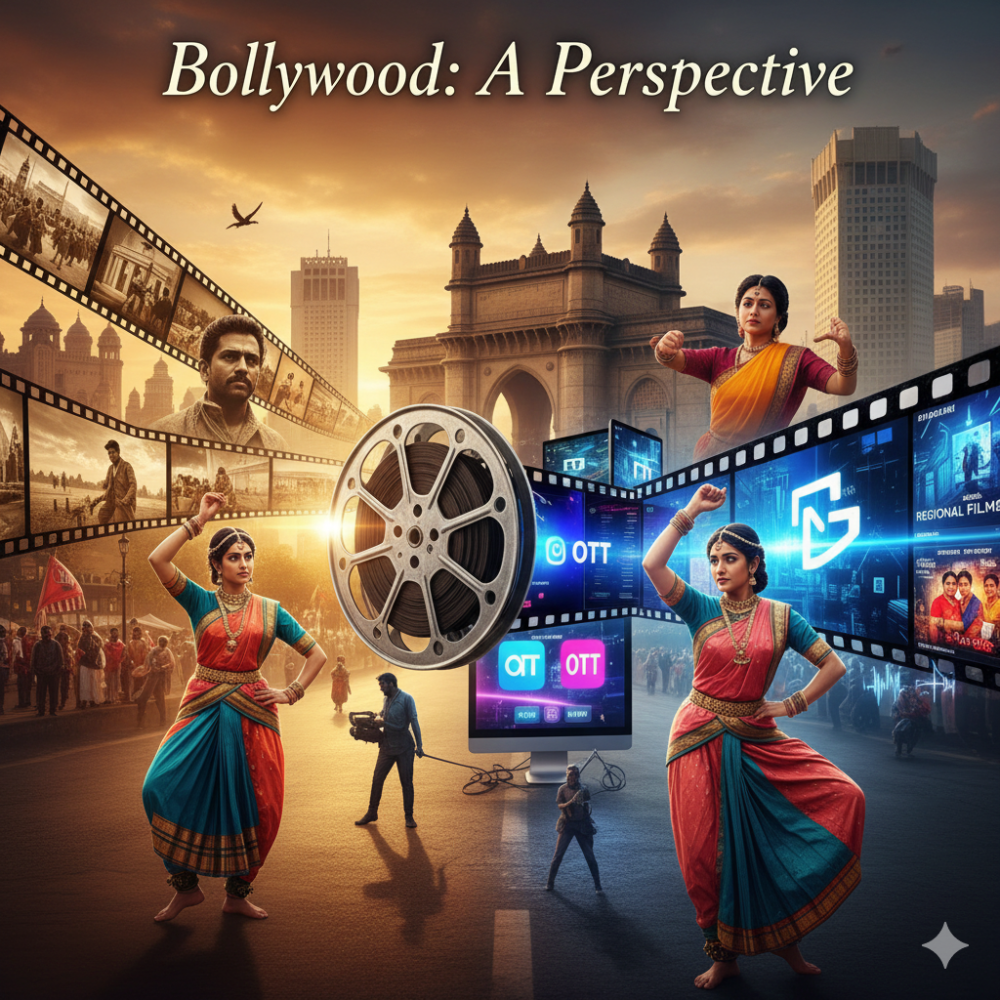
- Internet Revolution: High-speed internet and smartphones have exposed audiences to international cinema, shifting the focus from “hero worshiping” to appreciating realism and method acting.+1
- Breaking Barriers: The success of Bahubali and the rise of OTT platforms (Netflix, Amazon Prime) have proven that language is no longer a barrier. Subtitles and dubbing have allowed regional treasures to challenge Bollywood’s dominance.+3
6. Future Outlook
While Bollywood has faced a downfall over the last two decades, it possesses the talent and resources to “bounce back”. To remain relevant, the industry must:+2
- Prioritize quality content over superstar-led remakes.
- Experiment with new genres, such as ancient legends, cultural themes, and strong female leads.
- Look beyond box office collections to embrace creativity as the “soul” of storytelling.
Visited 13 times, 1 visit(s) today